Anyone who has tried to recreate an American recipe in a UAE kitchen knows that the ingredients matter as much as the method. From the precise leavening of a classic chocolate chip cookie to the texture of a proper layer cake, American baking ingredients are formulated for the recipes that call for them. For home bakers across Dubai and the wider GCC, sourcing the genuine article is the difference between a result that almost works and one that tastes exactly as it should.
This guide covers the American baking ingredients worth keeping in your pantry, why they behave differently from local equivalents, and how to build a reliable baking cupboard. Whether you are making cookies for the family or working through an ambitious dessert, knowing what to stock sets you up for consistent success and takes much of the guesswork out of following a recipe written for an American kitchen.
It also tackles the practical side of baking American recipes in the Gulf: the conversions, the storage challenges that come with a warm climate, and the seasonal ingredients that let you join in with the American baking calendar wherever you happen to live. The goal is to make American baking feel approachable and dependable rather than a constant exercise in improvisation.
American home baking has a character all its own. It tends to favour generous, comforting results: thick, chewy cookies; deeply chocolatey brownies; tall, tender layer cakes; and pies with a confident sweetness. Much of that character comes directly from the ingredients, from the molasses in brown sugar to the shape-holding chocolate chips to the corn syrup that keeps a frosting glossy. Recreating those results abroad is entirely achievable, but it depends on understanding what each ingredient contributes and then sourcing the genuine version where it counts. That is what this guide sets out to make straightforward for any home baker in the region.
Why American baking ingredients are different
It is easy to assume that flour is flour and sugar is sugar, but in baking those small differences are decisive. American baking traditions developed around products with particular protein levels, milling, moisture content and chemical behaviour, and recipes were tested against exactly those products. When you swap in a local equivalent, you are not simply changing a brand; you are often changing the chemistry of the bake. The result can be a cookie that spreads too far, a cake that rises unevenly or a crumb that turns out denser than intended.
This is why experienced home bakers in the UAE tend to seek out genuine American ingredients when they are following an American recipe. It is not snobbery; it is a recognition that the recipe and the ingredient are a matched pair. Once you understand which ingredients are most sensitive to substitution, you can make informed choices about where authenticity matters most and where a local product will do perfectly well.
A helpful way to think about it is to separate ingredients into those where the brand and origin genuinely change the outcome and those where they do not. Leaveners, chocolate chips, corn syrup, brown sugar and extracts sit firmly in the first group, because their chemistry or formulation directly shapes how the bake behaves and tastes. Plain water, salt and the like sit in the second, where any decent product will perform identically. Most recipes contain a mix of both, so the skill lies in knowing which two or three ingredients to insist on and which can be sourced casually. That distinction is what keeps a baking cupboard both authentic and practical rather than needlessly exhaustive.
Flours, sugars and the building blocks
The foundation of American baking starts with flour and sugar, and the differences here are more significant than many bakers expect. American all-purpose flour, cake flour and self-rising flour each have characteristics suited to specific recipes, and substituting freely can change the crumb and rise. Cake flour is milled finer and lower in protein for a tender crumb, while all-purpose flour is the everyday workhorse, and self-rising flour already contains leavening, so using it in place of plain flour throws the recipe off entirely. Brown sugar, in particular, is a defining ingredient in American baking, lending moisture and a deep caramel note that recipes rely on.
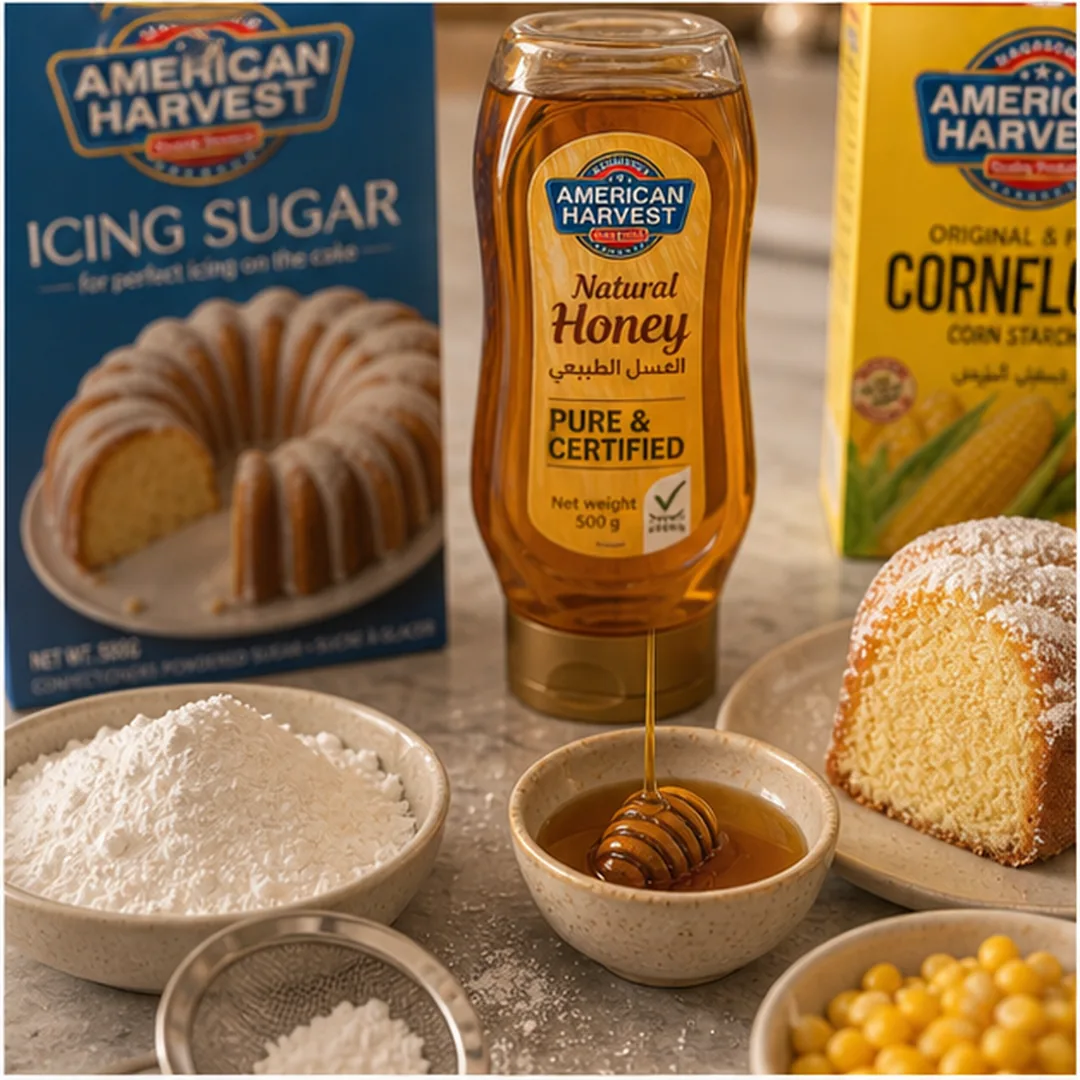
Specialist sugars such as light and dark brown sugar, confectioners sugar and corn syrup feature heavily in US recipes. When you %browse the American baking products we stock%, you will find these foundational items alongside the more recognisable products, which makes it far easier to follow an American recipe to the letter rather than improvising. Corn syrup in particular has no neat local substitute, and it is what gives pecan pie and certain frostings their characteristic texture.
Choosing the right flour for the job
The single most common flour mistake is treating all-purpose, cake and self-rising flour as interchangeable. Each is built for a purpose. Reach for cake flour when a recipe wants a delicate, fine crumb, such as a sponge or a layer cake. Use all-purpose for cookies, brownies and the majority of everyday bakes. Save self-rising flour for the specific recipes that call for it, and never use it where plain flour is specified, because the built-in leavening will throw the balance off. Keeping at least all-purpose and one specialist flour on hand covers most American recipes.
Understanding the sugars
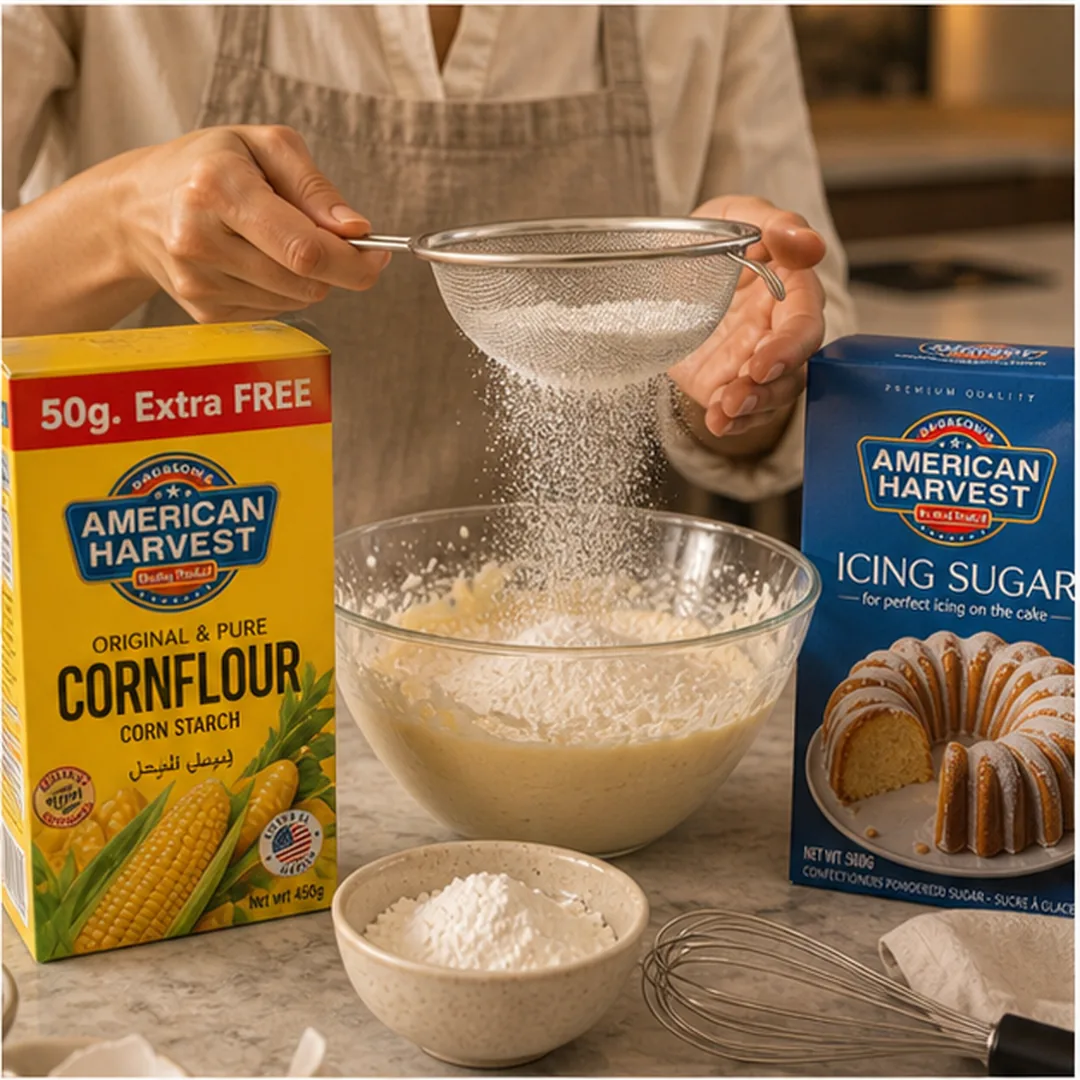
Sugar in American baking does far more than sweeten. White granulated sugar contributes to spread and crisp edges, while brown sugar brings moisture, chew and a caramel depth thanks to its molasses content. Confectioners sugar, also called powdered or icing sugar, dissolves smoothly and is essential for frostings, glazes and delicate dustings. Corn syrup, meanwhile, is a workhorse for texture rather than sweetness, keeping caramels smooth and frostings glossy and stopping sugar from crystallising. Knowing what each sugar actually does in a recipe makes it much easier to understand why a substitution might fall short, and why the specified type is worth sourcing.
Leaveners and the science of the rise
Getting the rise right is where many home bakers come unstuck, and it usually comes down to leaveners. American recipes are written around specific products, and using the correct baking soda and baking powder is essential for the intended texture. The chemistry is precise, so a like-for-like American product gives a far more predictable result than an approximate substitute. Baking soda needs an acid in the recipe to activate, while baking powder is self-contained, and confusing the two is one of the most common reasons a bake fails to rise as expected.
Freshness is just as important as using the correct product. Both baking soda and baking powder lose potency over time, and in the humidity of a Gulf kitchen they can degrade faster than the printed date suggests. A quick test, dropping a little baking soda into vinegar or baking powder into hot water, tells you instantly whether it still fizzes vigorously. Replacing tired leaveners is one of the cheapest ways to rescue disappointing bakes.
Yeast and the world of American breads
Leavening is not only about the chemical leaveners. American baking also has a rich tradition of yeasted breads, rolls and cinnamon buns, and the yeast you use behaves in its own particular way. Active dry yeast needs proofing in warm liquid before use, while instant or rapid-rise yeast can be mixed straight into the dry ingredients, and the two are not always swapped freely without adjusting the method. In the UAE's warmth, doughs tend to rise faster than the recipe assumes, which is usually an advantage but can catch out bakers used to cooler kitchens. Keeping an eye on the dough rather than the clock, and slowing the rise in a cooler spot if needed, gives the most reliable results for breads and buns.
Why precision matters in baking
Baking is closer to chemistry than cooking, and small variations compound. The ratio of leavener to flour, the type of sugar and even the moisture content all interact. This is exactly why home bakers who care about consistency lean towards authentic American ingredients when following American recipes. The recipe was tested with those products, and matching them removes a major source of error. In a warm and often humid UAE kitchen, keeping flours and leaveners well sealed also helps them perform as the recipe intends, since both absorb moisture from the air over time.
Chips, chunks and flavourings
The fun part of American baking lies in the add-ins and flavourings. Chocolate chips and chunks, butterscotch and peanut butter chips, vanilla and other extracts, and a whole world of festive and seasonal flavours give American baking its character. American chocolate chips are formulated to hold their shape during baking, which is why they perform so well in cookies and bars, leaving distinct pockets of chocolate rather than melting into the dough.
Extracts and flavourings are another area where authenticity shows. Genuine American vanilla and other extracts deliver the depth that recipes expect, and they make a noticeable difference in the finished bake. Almond, peppermint and maple flavourings open up seasonal classics, and a small bottle goes a long way. Stocking a few key flavourings opens up a huge range of recipes without much shelf space.
It is worth distinguishing between pure extracts and imitation flavourings, as American recipes sometimes assume one or the other. Pure vanilla extract, made from real vanilla beans, has a rounded, complex depth that imitation versions only approximate, and in recipes where vanilla is the star it genuinely shows. For bakes where the flavour is a supporting note rather than the headline, an imitation flavouring may be perfectly adequate and more economical. Knowing which is which lets you spend where it matters and economise where it does not, building a flavouring shelf that is both authentic and sensible. The same logic applies to chips and add-ins: splurge on quality where the ingredient defines the bake, and keep things simple elsewhere.
The same goes for the more decorative side of American baking. Sprinkles, coloured sugars, frosting tubs and the candies used to top cookies and cupcakes are part of what gives American treats their cheerful, generous look. They store well, take up little room and turn an ordinary bake into something that looks the part for a birthday or a holiday. A small collection of these finishing touches is one of the easiest upgrades to a baking cupboard.
It is also worth noting how much these add-ins shape the identity of American bakes in particular. A plain cookie becomes a classic the moment it is studded with the right chocolate chips, and a simple cupcake becomes a celebration with a swirl of frosting and a scatter of sprinkles. This generosity with mix-ins and decoration is part of what distinguishes American home baking from many other traditions, and it is easy to recreate once the cupboard holds a few dependable favourites. Because most of these items are shelf-stable and compact, they reward buying ahead, so you are never one missing ingredient away from abandoning a recipe a child has set their heart on.
The supporting cast of fats and dairy
Behind the flours, sugars and flavourings sits a quieter set of ingredients that nonetheless shape the result. Evaporated and condensed milk feature in countless American recipes, from fudge to pumpkin pie to no-churn ice cream, and they are not always interchangeable with one another, so the recipe's specified type matters. Peanut butter, both smooth and crunchy, is a baking ingredient in its own right in American kitchens, anchoring cookies, bars and frostings. Shortening, used in some pie crusts and frostings for a particular texture, is another item that has no exact local equivalent. Keeping these in mind rounds out a cupboard that can handle the full breadth of American recipes rather than just the obvious ones.
Mixes and shortcuts that still deliver
Not every bake needs to start from scratch. American baking mixes for brownies, cookies, cakes and pancakes are a genuine convenience, and the good ones produce results that rival home-made. For busy households, having a few reliable mixes on hand means you can bake something authentic without a full afternoon in the kitchen. Mixes are also a friendly entry point for new bakers and for baking with children, since much of the measuring is already done and the outcome is dependable.
- All-purpose, cake and self-rising flours for different textures
- Light and dark brown sugar, confectioners sugar and corn syrup
- Baking soda and baking powder for a reliable rise
- Chocolate chips, chunks and flavoured baking chips
- Vanilla and other extracts plus dependable ready-mixes
- Sprinkles, frostings and decorations for finishing touches
Adapting American recipes to a UAE kitchen
Even with the right ingredients, a few practical adjustments help American recipes succeed locally. Many US recipes give oven temperatures in Fahrenheit and measure by volume in cups, so a reliable conversion and a set of standard American cup measures save a lot of second-guessing. Storage matters too: chocolate chips, butter and certain flours benefit from cool, sealed storage given the climate, and ingredients are best brought to room temperature before mixing when a recipe assumes it. None of this is difficult, but getting into these small habits is what makes the difference between a bake that is close and one that is faithful to the original.
Conversions, measures and oven quirks
American recipes lean heavily on volume measurement, so a proper set of cup and spoon measures is one of the most useful things a UAE home baker can own. For temperatures, it is worth remembering that American Fahrenheit settings need converting to the Celsius dials common here, and an inexpensive oven thermometer is invaluable because built-in dials are frequently inaccurate. Where a recipe gives weights as well as cups, weighing is almost always the more reliable route, especially for flour, which can vary considerably by how it is scooped.
Beating the climate in your storage
The Gulf climate is the home baker's biggest practical challenge. Heat and humidity shorten the life of flours, sugars, leaveners and chocolate alike. The simple fixes are effective: keep flours and sugars in airtight containers, store chocolate chips somewhere cool and sealed so they do not bloom or clump, and buy leaveners in sensible quantities so they are used while still active. A little organisation here protects both the quality of your bakes and the value of the ingredients you have sourced.
A practical starter cupboard
For a home baker who is just beginning to stock American ingredients, it helps to know where to start rather than trying to buy everything at once. A sensible first shop covers the items that unlock the largest number of recipes for the least shelf space. That means all-purpose flour, white and brown sugar, baking soda, baking powder, pure vanilla extract and a good chocolate chip. With just those, you can make the most beloved American bakes, from chocolate chip cookies to brownies to a simple cake, and build confidence before expanding.
From there, the cupboard grows naturally with your ambitions. Cake flour and confectioners sugar open up tender cakes and proper frostings. Corn syrup unlocks pecan pie and glossy confections. A few additional flavourings and a handful of seasonal decorations let you mark the occasions through the year. The point is that an American baking cupboard does not need to arrive fully formed; it is far more enjoyable to build it recipe by recipe, adding each specialist item as a new bake calls for it. Over a few months, almost without noticing, you end up with a genuinely capable pantry.
Building a reliable baking cupboard
The most rewarding way to bake American recipes is to keep a small, well-chosen set of staples on hand so you are never caught short mid-recipe. Stock the foundational flours and sugars, the correct leaveners, a couple of flavourings and your favourite chips, and you can tackle the majority of American bakes at a moment's notice. To find these ingredients locally, you can %find a store near you% and plan your baking shop around what is stocked nearby.
If a recipe calls for something unusual or you cannot locate a particular product, it is worth asking rather than substituting blindly. You can %get in touch about a specific ingredient% to check availability or get a recommendation. With genuine American baking ingredients in the cupboard, home bakers in the UAE can recreate their favourite recipes with the confidence that the results will taste just as they are meant to.
Sourcing authentic ingredients you can trust
Authenticity is not only about taste; it is about knowing what you are buying. When ingredients pass through a recognised importer, you have confidence that they are genuine American products, properly handled and clearly labelled, rather than uncertain grey-market stock. That matters for performance in the kitchen and for the simple reassurance of knowing where your food has come from. If you would like to understand more about the importer behind the products, you can %read more about our story as an American food importer% and see how authentic American baking ingredients reach shelves across the UAE and GCC.
This is especially worthwhile for the ingredients where authenticity is most decisive, such as leaveners, chocolate chips, corn syrup and extracts. For these, a trusted source is well worth seeking out, because they are exactly the items where a substitute is most likely to let a recipe down. Building a relationship with a reliable supplier takes the uncertainty out of restocking and means you always know where to turn for the harder-to-find items.
Baking with children and sharing the tradition
One of the most rewarding aspects of keeping an American baking cupboard is how easily it brings people into the kitchen. Baking is a wonderfully accessible activity for children, and the forgiving nature of cookies, brownies and cupcakes makes them ideal first projects. Letting children measure chips, stir batter and add sprinkles turns an afternoon into a memory, and it quietly passes on a food culture that might otherwise feel distant from a UAE upbringing. Mixes are especially useful here, since the dependable result keeps the experience fun rather than frustrating.
For expatriate families, this is also a way of keeping a connection to home alive across generations. A child who grows up making the same chocolate chip cookies their parents made carries that thread forward, regardless of where in the world they happen to live. The familiar smells, the well-worn recipe and the genuine ingredients all combine into something larger than the bake itself. It is, in a small way, the same instinct that drives families to source authentic ingredients for the holidays: a wish to keep a tradition intact and to share it with the people around the table.
The home baker in the wider GCC
Home baking enthusiasm is not confined to Dubai. Across the wider GCC, which comprises the UAE, Saudi Arabia, Qatar, Kuwait, Bahrain and Oman, communities of keen home bakers are recreating American recipes and seeking out the genuine ingredients to do so well. The challenges are broadly the same everywhere in the region: a warm climate that demands careful storage, recipes written in unfamiliar units, and the need to source specialist products that are not everyday items locally.
The solution travels just as well as the challenge. A reliable supply of authentic American baking ingredients, brought in through a recognised importer with regional reach, lets bakers anywhere in the Gulf follow their favourite recipes faithfully. What varies is mostly the breadth of what is stocked nearby and how readily seasonal items appear, so confirming availability ahead of an ambitious bake is always worthwhile. Wherever you are baking in the region, building a dependable cupboard and knowing where to restock is the foundation of consistent results.
Common baking mistakes and how to avoid them
Most baking disappointments trace back to a handful of avoidable errors. Mixing up baking soda and baking powder, or using a tired leavener, is the classic culprit behind a flat bake. Mis-measuring flour by scooping straight from the bag, which packs in too much, is another frequent cause of dry, dense results. Over-mixing once the flour goes in develops gluten and toughens cakes and cookies, while an inaccurate oven quietly sabotages everything if left unchecked.
Ingredient temperature is another quiet saboteur. Many American recipes assume butter, eggs and dairy are at room temperature so they emulsify smoothly, and using them straight from the fridge can leave a batter that looks curdled and bakes unevenly. Conversely, some recipes depend on cold butter for flakiness, as in pie crusts and biscuits, and letting it warm defeats the purpose. Reading a recipe in full before starting, and noting where temperature is specified, prevents a surprising number of failures. It is a small habit that pays off every single time.
The encouraging news is that every one of these is easy to fix once you know to look for it. Use the correct, fresh leavener; spoon and level your flour or weigh it; mix just until combined; and verify your oven with a thermometer. Pair these habits with genuine American ingredients and your bakes become reliably good rather than occasionally lucky. Consistency, more than any single trick, is what separates a confident home baker from a frustrated one.
Temperature, timing and the local climate
Several baking problems in the UAE trace directly back to the climate, and recognising that makes them easy to manage. Butter softens far faster here than recipes assume, so a stick left out for an American room temperature can turn greasy and ruin a creaming step; taking it out only shortly before you need it keeps it workable. Doughs and batters warm quickly too, which can cause cookies to spread excessively, so chilling cookie dough before baking is more important in a hot kitchen than in a cool one. Even cooling racks matter, since a humid kitchen can leave crusts soft if bakes are not given proper airflow as they cool. These small adjustments, layered on top of good ingredients and sound technique, are what make American recipes behave the way their authors intended.
Baking through the seasons and celebrations
American baking really comes alive around the calendar of holidays and celebrations, and stocking a few seasonal ingredients lets you join in wherever you are. Pumpkin and warm spices anchor the autumn bakes, peppermint and rich chocolate define the winter holidays, and pastel sprinkles and bright frostings carry the lighter celebrations of spring. Having the foundational pantry already in place means that when one of these occasions comes around, you only need to add a flavouring or a decoration rather than starting from nothing.
It is worth being specific about how the seasons map onto a baking cupboard, because a little forethought saves a lot of last-minute searching. The autumn and Thanksgiving stretch leans on canned pumpkin, pumpkin pie spice, pecans and corn syrup for the classic pies. The winter holidays bring peppermint extract, crushed candy canes, rich chocolate and gingerbread spices to the fore. Spring celebrations call for pastel sprinkles, bright frostings and lighter, fruitier flavours, while summer favours no-bake recipes and the condensed milk that anchors many of them. Keeping the foundational pantry constant and rotating just a handful of seasonal flavourings through the year is the most efficient way to stay ready for any occasion.
For families, baking together is also one of the most enjoyable ways to share American food culture at home. Cookies and brownies are forgiving enough for children to help with, and the familiar smells and tastes become part of how the household marks the year. Whether you are an experienced baker chasing an exact result or someone making your first batch of chocolate chip cookies, the same principle holds: genuine ingredients give you a dependable starting point, and from there the kitchen is yours to enjoy.
Over time, a well-stocked American baking cupboard becomes something you reach for without thinking, ready for a spontaneous batch of cookies on a quiet evening or a full celebration spread when the occasion calls for it. That readiness is the quiet reward of getting the basics right, and it is what turns American baking from an occasional project into a genuine part of how you cook at home. When you are ready to stock up, the simplest place to %begin building your American baking cupboard% is with the foundational staples, adding the seasonal flavourings and decorations as the calendar calls for them.
Frequently Asked Questions
Why do American baking recipes need American ingredients?
American recipes are developed and tested with specific products, particularly flours, sugars and leaveners that have their own characteristics. Substituting freely can change the texture, rise and flavour of the finished bake. Using genuine American ingredients gives a far more predictable, authentic result. It removes one of the biggest sources of error when following a recipe written for a US kitchen.
What is the difference between brown sugar in American recipes?
American light and dark brown sugar add moisture and a caramel depth that many US recipes rely on, especially cookies and bars. The two differ in molasses content, which affects colour and flavour. Following the recipe's specified type helps you achieve the intended taste and texture. As a guide, dark brown sugar gives a richer, more pronounced flavour than light.
Do American chocolate chips behave differently when baking?
Yes, American chocolate chips are formulated to hold their shape during baking rather than fully melting away. This is why they work so well in cookies and bars where you want distinct pockets of chocolate. Using genuine chips gives the classic appearance and texture of American bakes. Storing them cool and sealed in the UAE climate keeps them from clumping or developing a bloom.
Where can I buy American baking ingredients in the UAE?
Authentic American baking ingredients are available through recognised importers and their stockists across the UAE and GCC. Checking the where-to-buy information helps you find a convenient store. For unusual or seasonal items, contacting the supplier directly is the best way to confirm availability. Sourcing through a trusted importer also assures you that the products are genuine and properly handled.
How do I convert American cup measures and oven temperatures?
American recipes measure by volume, so a standard set of US cup and spoon measures is the simplest solution. Oven temperatures are usually given in Fahrenheit and need converting to the Celsius settings common in the UAE. An inexpensive oven thermometer is worth having, as built-in dials are often inaccurate. Where weights are provided, weighing ingredients is generally the most reliable method.
What is corn syrup and can I substitute it?
Corn syrup is a liquid sweetener that gives pecan pie, certain frostings and confectionery their characteristic smooth texture and prevents crystallisation. There is no neat local substitute that behaves the same way, which is why many bakers import the genuine product. Improvised replacements often change the texture noticeably. For recipes that depend on it, sourcing the real ingredient is the most reliable approach.
How should I store baking ingredients in the UAE climate?
Heat and humidity shorten the life of flours, sugars, leaveners and chocolate, so airtight containers and a cool storage spot make a real difference. Chocolate chips in particular should be kept cool and sealed to avoid clumping and bloom. Buying leaveners in sensible quantities ensures you use them while they are still active. A little organisation protects both the quality and the value of your ingredients.
Are American baking mixes worth using?
Yes, good American baking mixes for brownies, cookies, cakes and pancakes deliver dependable, authentic results with much less effort. They are a genuine convenience for busy households and a friendly starting point for new bakers. Because much of the measuring is already done, the outcome is consistent. They are also ideal for baking with children when you want a reliable result.
How do I know if my baking soda or baking powder is still good?
Both leaveners lose potency over time and can degrade faster in a humid climate. To test baking soda, drop a little into vinegar; for baking powder, stir some into hot water. A vigorous fizz means it is still active, while a weak reaction means it is time to replace it. Fresh leaveners are one of the cheapest ways to ensure a reliable rise.