When you pick up a familiar American snack or pantry item in a UAE supermarket, it is easy to take its condition for granted. The cereal box is crisp, the chocolate bar holds its shape, the bottle of sauce looks exactly as it would on a shelf in Chicago or Dallas. Yet behind every one of those products lies a carefully managed journey of many thousands of kilometres, across oceans and through some of the hottest conditions on earth. Maintaining American food quality across that distance is a discipline in its own right, involving rigorous standards, controlled logistics, and constant attention to freshness.
Understanding how this process works gives shoppers and retail buyers genuine confidence in what they are purchasing. It also explains why sourcing from a dedicated importer makes such a difference compared with informal, parallel, or unverified supply. A product is only as good as the journey it has survived, and that journey is invisible to the person reaching for it on the shelf. The purpose of this article is to make it visible.
In the pages that follow we trace the path an American product takes from the factory floor to the UAE shelf, and the safeguards applied at every stage along the way. We will look at genuine sourcing, food import standards, the realities of shipping in a hot climate, the cold chain, local storage and rotation, and the practical questions any buyer can ask to separate a serious supplier from a careless one. By the end, you should be able to read a product's condition as a story about how it was handled.
It starts at the source
Quality cannot be added later; it has to be protected from the very beginning. Reputable American manufacturers operate to strict production and labelling requirements, and the products that leave their facilities are made to a consistent specification. The first responsibility of an importer is to buy from genuine, traceable sources rather than the grey market, ensuring that every item is the authentic article with a clear and documented history.
This matters because authenticity and quality are inseparable. Genuine sourcing means correct formulations, accurate ingredient lists, allergen declarations that can be trusted, and packaging that meets the original manufacturer's standard. A product bought through an unverified channel may look identical on the outside while differing in ways that matter, from its recipe to the conditions it was stored in before it ever reached the importer.
The grey market and why it is risky
The grey market refers to genuine-looking goods that move outside a manufacturer's authorised distribution network. Such products may be diverted, repackaged, or relabelled, and crucially their handling history is unknown. A bar of chocolate that has already endured a summer in an uncooled warehouse can look perfectly fine while having lost much of its quality. Because the chain of custody is broken, there is no way to verify what the product has been through, which is precisely why disciplined importers avoid it.
The danger of the grey market is not always visible. A consignment may arrive looking entirely normal, with intact packaging and a date that has not yet passed, and still be a poor product because of how it was stored along the way. The savings that grey-market goods sometimes appear to offer are an illusion when measured against the risk of customer complaints, wastage, and reputational damage for a retailer. Authentic, authorised sourcing costs a little more in the short term and saves a great deal in the long run.
The manufacturer relationship
Behind genuine sourcing sits a relationship with the manufacturer or its authorised distributors. That relationship is what gives an importer access to correct product specifications, advance notice of recipe or packaging changes, and a clear point of contact if a question arises about a batch. It is also what allows an importer to commit to volumes and timing with confidence, so that retail shelves stay stocked without resorting to opportunistic, untraceable purchases. Sourcing is therefore not a single transaction but an ongoing, accountable partnership.
Traceability as a quality tool
Traceability is not bureaucratic box-ticking; it is one of the most practical quality tools an importer has. When every consignment can be traced back to an authorised source, problems can be isolated quickly and confidently. If a manufacturer issues a recall or a batch query, a traceable supply chain allows the affected stock to be identified and removed without guesswork. If you want to see the calibre of brands handled this way, you can %explore the brands we import% and recognise the names you already trust.
Meeting UAE food import standards
Bringing food into the UAE is not simply a matter of shipping it across an ocean. Imported food must satisfy a comprehensive set of food import standards covering labelling, ingredient declarations, shelf-life requirements, and documentation. These rules exist to protect consumers and to ensure that what reaches the market is safe, accurately described, and fit for sale. They are also exacting, and meeting them consistently is a core part of an importer's craft.
The UAE applies its standards through a combination of federal authorities and local municipal inspection at the point of entry. Food consignments are checked against requirements for labelling content, language, shelf life on arrival, and the presence of correct supporting paperwork. Goods that fall short can be detained, returned, or destroyed, which makes preparation not merely advisable but essential.
These standards are not obstacles to be worked around; they are part of what makes the UAE market trustworthy for consumers. A shopper in the UAE can pick up an imported product with reasonable confidence that it has been checked for safety and accurate description, and that confidence is itself valuable. For the importer, treating the standards as a baseline to be met thoroughly, rather than a hurdle to be cleared at the last moment, is what keeps the supply chain smooth and the products in good condition. Compliance and quality, in practice, pull in the same direction.
Documentation and compliance
Each consignment is accompanied by paperwork that establishes its origin, contents, and compliance status. Labels frequently need to carry information in line with local requirements, including ingredient and allergen declarations and, in many cases, Arabic-language details. Products must also arrive with sufficient remaining shelf life, since regulators commonly require a meaningful proportion of the stated life to remain at the point of entry. An experienced importer manages all of this in advance, so that goods clear inspection smoothly and are never delayed in conditions that could compromise quality.
This preparation is more than a formality. Goods held up at a port because of incomplete paperwork can sit in less-than-ideal conditions, eating into their shelf life and risking exposure to heat. By anticipating the requirements and preparing labelling and documentation before a shipment even departs, a careful importer keeps products moving and protects them from the delays that quietly erode quality. Every avoided day at the port is a day of freshness preserved.
Labelling done right the first time
Labelling is one of the most common reasons consignments are delayed, and one of the easiest to get right with foresight. The most reliable approach is to align labelling with local requirements before goods leave the United States, rather than scrambling to relabel after arrival. Doing the work upstream means products are compliant the moment they land, avoiding both delay and the handling risk that comes with reworking stock under time pressure in a hot environment.
Protecting freshness in transit
The longest and most demanding part of the journey is the shipping itself. Maintaining freshness in imported food depends heavily on how products are packed, the conditions they travel in, and how quickly they move through the supply chain. Temperature-sensitive items require careful handling, while even shelf-stable goods can suffer if exposed to extreme heat or moisture over a long voyage.
For this reason, responsible importers plan routes and storage to minimise risk. Goods are kept in suitable conditions at every stage, from the originating warehouse to the vessel, through the port, and into local storage. The aim is to keep products in an environment as close as possible to the one the manufacturer intended, right up to the moment they reach the customer. Consistency, not heroics, is what protects quality across such a long route.
Sea freight versus air freight
Most ambient grocery products travel to the UAE by sea, because sea freight is cost-effective for the large volumes that keep retail shelves stocked. The trade-off is time: a sea voyage takes weeks rather than days, which places a premium on shelf life and on protecting goods from heat during the journey and at both ports. Air freight is faster and is sometimes used for high-value or time-sensitive lines, but its cost means it is the exception rather than the rule. A good importer chooses the right mode for each product and plans the timing so that goods arrive with plenty of life remaining.
The choice of mode is also a choice about risk. A long sea voyage means more time exposed to ambient conditions, so it suits durable, well-packed, shelf-stable goods with generous shelf life. More delicate or shorter-life products may justify the cost of faster transport precisely because every day saved is a day of freshness retained. Matching the product to the right route is one of the quiet judgements that separates a thoughtful importer from one that simply ships everything the cheapest way and hopes for the best.
Reefer containers and temperature-controlled transport
For products that cannot tolerate ambient heat, refrigerated containers, known as reefers, provide a controlled environment across the entire voyage. A reefer maintains a set temperature regardless of conditions outside, which is what makes it possible to move chilled and heat-sensitive goods reliably from a temperate origin to a hot destination. The container is only part of the answer, though; it has to be loaded and unloaded with the same discipline, so that the controlled environment is not undone in the moments at either end. A reefer is a tool, and like any tool it depends on the care of the people using it.
Packaging as the first line of defence
Long before a product reaches a container, its packaging is already working to protect it. Sturdy cartons, appropriate inner packaging, and sensible palletisation guard against crushing, moisture, and temperature swings. Items prone to melting or bloom benefit from packing that limits heat exposure and movement. Packaging is the quiet, constant guardian of a product across the whole journey, and damaged or inadequate packaging is often the first visible sign that something has gone wrong in transit.
The role of the cold chain
For chilled and heat-sensitive products, an unbroken cold chain is essential. This means maintaining a controlled temperature continuously, with no gaps where the product could warm up and deteriorate. A single lapse can affect texture, flavour, and safety, which is why monitoring and reliable infrastructure are so important. The discipline of the cold chain is one of the clearest markers of a serious importer.
The UAE climate makes this discipline especially demanding. Summer temperatures regularly exceed 45 degrees Celsius, with very high humidity along the coast, so any product left unprotected during loading, transfer, or storage is at immediate risk. Even items that are not strictly chilled, such as chocolate, can be affected by heat, melting or developing a dull surface bloom. Managing these transitions carefully, particularly the brief but critical moments when goods move between transport and storage, is where experience truly shows.
The vulnerable handover points
It is a common misconception that the cold chain is mainly about the long stretches of transport. In practice, the most vulnerable moments are the handovers: container to dockside, dockside to truck, truck to warehouse. These transfers are brief, but on a 45-degree afternoon even a short exposure on an open loading bay can do damage. Consider a pallet of chocolate moved across an uncovered yard at midday in August; the loss of quality can begin in minutes. Disciplined importers treat these handovers as the highest-risk points and plan them to be as fast and as shaded as possible.
Planning a handover well is a small art. It means having the receiving vehicle ready before the goods are exposed, choosing the cooler parts of the day where possible, using covered loading areas, and never leaving temperature-sensitive stock standing in the sun while paperwork is sorted out. These are not dramatic measures, but the difference they make is real. A handover that takes two minutes in the shade protects a product that a twenty-minute wait on an open bay would quietly ruin. The care shown at these unglamorous moments is one of the truest tests of an importer's discipline.
Monitoring and accountability
Maintaining a cold chain is one thing; proving it is another. Temperature monitoring through the journey provides a record that conditions were held within range, and it creates accountability. If a reading shows a lapse, the affected stock can be assessed rather than waved through. As a rule of thumb, the supplier who can describe how they monitor temperature is also the supplier who actually maintains it, because the two habits tend to go together.
Storage and handling in the UAE
Arrival in the country marks an important milestone, but it is far from the finish line. The way goods are handled in the first hours and days after landing can have a lasting effect on how they reach the customer. Efficient unloading, prompt transfer into suitable storage, and careful inventory checks all help preserve the condition that has been protected over thousands of kilometres. A rushed or careless arrival process can undo much of the good work done in transit.
Once goods land, they must be stored in appropriate warehouse conditions, with ambient and chilled stock kept in their respective environments. Good warehousing in the UAE means more than a roof; it means temperature control sized for the climate, protection from humidity, and clean, pest-managed storage. The investment in proper facilities is precisely what allows quality to survive the final, deceptively dangerous stretch of the journey.
Stock rotation and the FIFO principle
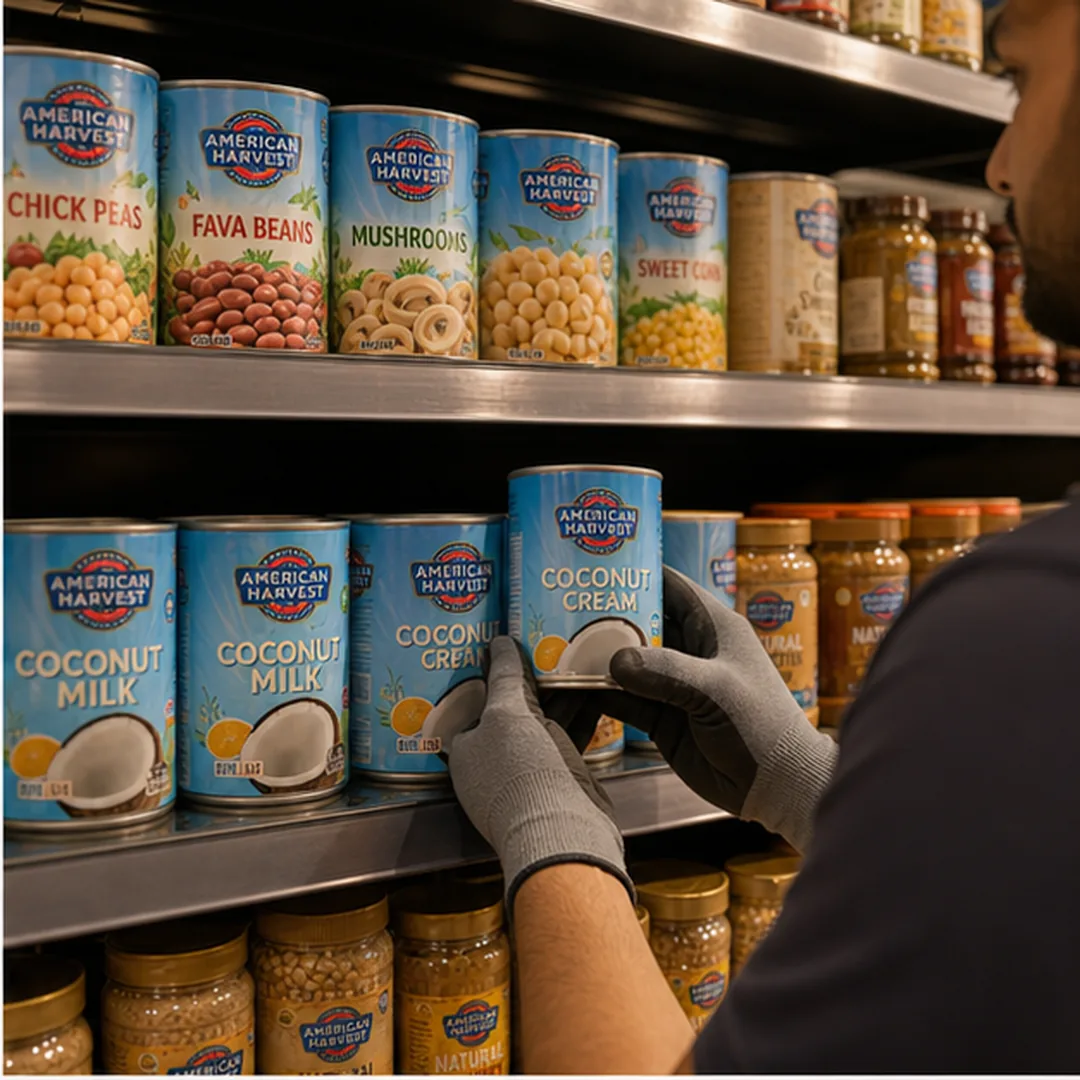
Storage alone is not enough; stock must also move in the right order. The first-in, first-out principle, in which older stock is dispatched before newer arrivals, prevents items from lingering and ensures that what reaches retailers is well within its best window. Disciplined rotation is unglamorous but decisive: it is the difference between a customer receiving a product with months of life ahead of it and one that is uncomfortably close to its date. This combination of correct storage and disciplined rotation is what keeps American food quality consistent on UAE shelves.
Inventory checks on arrival
A careful importer inspects stock as it arrives rather than simply shelving it. Checks for damage, temperature integrity, packaging condition, and remaining shelf life catch problems early, before compromised goods can reach a retailer or a shopper. Catching an issue at the warehouse door is far better than discovering it at the till. Behind all of this is a team that takes responsibility for the full chain rather than just one link. To understand the philosophy that drives this care, you can %learn more about who we are% and see how a focus on authenticity and reliability shapes every decision.
Managing humidity and pests
Heat is the most obvious enemy of imported food in the UAE, but it is not the only one. Coastal humidity can affect packaging, encourage clumping in dry goods, and degrade the appearance of products over time. A serious warehouse is therefore not only cooled but also managed for humidity, with proper ventilation and storage practices that keep moisture away from sensitive stock. Pest management is the other quiet discipline of good warehousing; clean, well-maintained, regularly inspected storage keeps food safe and saleable. None of this is visible to the shopper, yet all of it shows up in the condition of the product on the shelf.
From warehouse to shelf
The final leg of the journey takes products from the importer's warehouse into the hands of retailers and, ultimately, shoppers. This stage is often overlooked, yet it carries its own risks. Local distribution in a hot climate means goods may travel in vans and sit on receiving bays before they reach a chilled or air-conditioned store environment. The same care that protected the product across an ocean has to be maintained over these last few kilometres.
This is why the relationship between importer and retailer matters so much. A retailer who understands how to receive and store American lines correctly preserves the quality that has been so carefully protected up to that point, while one who leaves stock on a sunny bay can undo it in an afternoon. Working with stockists who handle products properly is part of how a serious importer protects quality all the way to the customer. You can %find where these products are stocked% and choose a stockist with confidence.
Shelf life and the shopper's experience
The most direct way a shopper experiences the quality of the supply chain is through shelf life. A product that arrives with plenty of life remaining gives the shopper time to use it, gives the retailer time to sell it, and signals that the journey was handled efficiently. A product that reaches the shelf already close to its date tells a quieter story of delays, poor planning, or careless rotation somewhere along the way. This is why disciplined importers treat remaining shelf life as a headline measure of success, not a detail. It is the single number that captures how well every other part of the chain has performed.
What can go wrong, and how it is prevented
It helps to understand the chain by looking at where it can fail, because each failure point has a corresponding safeguard. Heat exposure during a handover is prevented by fast, shaded transfers and temperature-controlled transport. A break in the cold chain is caught by monitoring and accountability. Delays at the port are avoided by preparing documentation and labelling in advance. Poor warehousing is countered by climate-controlled, humidity-managed, pest-managed facilities. Stale stock is prevented by first-in, first-out rotation. Each risk is real, and each has a deliberate answer.
Seen this way, quality is not a single act but a chain of prevented failures. The reason a product can travel many thousands of kilometres through some of the hottest conditions on earth and still arrive in perfect condition is that someone anticipated each thing that could go wrong and put a safeguard in place. The absence of problems on the shelf is not luck; it is the visible result of careful, invisible work. A supplier who can describe these safeguards is one who actually practises them.
An illustrative scenario
Consider a container of chocolate and snacks departing a warehouse in the United States in July, bound for Dubai. Loaded into a reefer at a controlled temperature, it crosses the ocean over several weeks while the documentation and Arabic labelling, prepared before departure, sit ready for inspection. On arrival, the container is cleared quickly because the paperwork is in order, and the goods are transferred to a cooled warehouse with minimal time on the open bay despite the August heat. There they are checked, recorded, and rotated into stock behind earlier arrivals. By the time a shopper lifts a bar from the shelf, it has months of life ahead and tastes exactly as the manufacturer intended. Every step in that scenario was a choice, and every choice protected the product.
Why trusted sourcing protects you
For both shoppers and retail buyers, the practical lesson is simple: the source matters as much as the product. A genuine American brand can only deliver its intended quality if it has been handled correctly throughout its journey. Choosing a supplier that controls the process end to end protects you from the risks of poor handling, dubious origins, or products nearing the end of their life.
The benefits are tangible. You get the authentic taste and quality the brand is known for, the assurance that the product is safe and compliant, and confidence that freshness has been preserved from factory to shelf. For a retailer, that translates into fewer complaints, less wastage, and a reputation for stocking dependable, genuine American lines. For a shopper, it simply means the product tastes the way it should.
Questions worth asking your supplier
If you are unsure about a product's journey, a few simple questions can reveal a great deal about how seriously a supplier takes quality. It is reasonable to ask the following:
- Where was this product sourced, and is the source authorised by the manufacturer?
- How was it shipped and stored, and was temperature maintained throughout?
- How much shelf life remains, and how is older stock rotated out first?
- What checks are carried out when goods arrive in the UAE?
Suppliers who control their chain end to end will answer these readily, because the care they take is something they are proud of rather than something to gloss over. A vague or defensive answer is itself an answer. If you are a retailer looking to stock American lines, or a shopper with questions about how a particular product is handled, you can %speak to our sourcing team% to discuss your needs directly.
The bigger picture across the GCC
The challenges described here are not unique to the UAE; they apply across the wider GCC, where hot climates and long supply lines are the shared reality from Saudi Arabia to Kuwait, Qatar, Bahrain and Oman. An importer that has mastered the discipline of getting American food to the UAE in perfect condition has, in effect, built a capability that serves the whole region. The standards are the same wherever the destination, even if the routes and local requirements differ.
For buyers, this regional perspective is reassuring. It means the care taken on a single shipment is not an isolated effort but part of a repeatable system, refined over many consignments and many seasons. That repeatability is what turns occasional good results into consistent quality you can rely on, year after year. To see the full picture of what we do, you can %return to our home page% at any time.
Seasonality and planning ahead
The GCC summer is the most testing period for any food supply chain, and it rewards planning. The hottest months, when daytime temperatures are at their peak, are precisely when handling errors are most punishing, so experienced importers schedule and protect their shipments with the season firmly in mind. Stock for the demanding summer months is planned in advance, transport is arranged to minimise exposure during the worst of the heat, and warehousing is prepared for the additional load on cooling. Planning around the calendar is one more way that quality is protected before a single product even moves.
The hallmarks of a serious importer
If there is a single takeaway from this journey, it is that quality is the sum of many deliberate decisions made out of sight. The serious importer is recognisable not by any one dramatic gesture but by a consistent pattern of care: genuine, traceable sourcing; documentation prepared in advance; the right transport mode for each product; an unbroken, monitored cold chain; climate-controlled warehousing; disciplined rotation; and inspection at every handover. None of these alone guarantees quality, but together they make it reliable.
For shoppers, this means the freedom to reach for a familiar brand and trust that it will taste as it should. For retailers, it means a partner whose care reduces complaints, wastage, and risk while protecting their own reputation. The journey from an American factory to a UAE shelf is long and unforgiving, but it is also well understood, and in the right hands it ends exactly where it should: with a genuine product, in perfect condition, ready to be enjoyed.
The journey of American food to the UAE is long and demanding, but with the right standards and the right partner, quality and freshness travel the whole way intact. From the factory floor to your kitchen, every careful decision along the route, every avoided delay, every maintained degree of temperature, and every rotation of stock adds up to a product that tastes exactly as it should. That is the quiet promise behind a genuinely well-sourced American brand on a UAE shelf.
Frequently Asked Questions
How is freshness maintained when food travels so far?
Freshness is protected through careful packing, suitable storage conditions, and efficient movement through the supply chain. Temperature-sensitive items travel within a controlled cold chain, while all goods are kept in environments close to what the manufacturer intended. Disciplined stock rotation then ensures older stock is sold first, so products reach customers well within their best window.
What food import standards apply to American products in the UAE?
Imported food must meet requirements covering labelling, ingredient and allergen declarations, shelf life on arrival, and supporting documentation, often including Arabic-language details. These standards ensure products are safe, accurately described, and fit for sale. A capable importer manages this compliance in advance so goods clear inspection without delay or unnecessary exposure to heat.
Why does buying from a dedicated importer matter?
A dedicated importer controls the full journey from genuine sourcing to local storage, protecting both authenticity and quality. This reduces the risk of poor handling, unverified grey-market origins, or products nearing the end of their shelf life. The result is the experience the brand intended, with traceability that allows any issue to be addressed quickly.
Does shelf-stable food still need special handling?
Yes. Even shelf-stable goods can be affected by extreme heat or moisture during a long voyage and at the port. Chocolate can melt or develop bloom, and packaging can degrade in humidity. Proper packing, suitable warehouse conditions, and disciplined stock rotation all help keep these products in good condition until they are sold.
What is the cold chain and why does it matter in the UAE?
The cold chain is the unbroken maintenance of a controlled temperature for chilled and heat-sensitive products, from origin to shelf. It matters intensely in the UAE because summer temperatures regularly exceed 45 degrees Celsius. A single lapse, especially during a handover between transport and storage, can affect texture, flavour, and safety, so monitoring and reliable infrastructure are essential.
Why is the grey market a risk for imported food?
Grey-market goods move outside a manufacturer's authorised distribution, so their handling history is unknown and their chain of custody is broken. A product may look genuine while having endured poor storage or being close to its date. Because there is no way to verify what it has been through, disciplined importers avoid the grey market entirely in favour of authorised, traceable sources.
How long does shipping American food to the UAE take?
Most ambient grocery products travel by sea, which takes weeks rather than days but is cost-effective for retail volumes. Air freight is faster and is occasionally used for high-value or time-sensitive lines, though its cost makes it the exception. Either way, a good importer plans timing so that goods arrive with ample shelf life remaining for distribution and sale.
How can I tell if a supplier handles products properly?
Ask direct questions about sourcing, shipping and storage temperature, remaining shelf life, stock rotation, and the checks done on arrival. Suppliers who control their chain answer these readily because they are proud of the care they take. A vague or defensive response is a warning sign, while clear, confident answers indicate a supplier who takes quality seriously.
What does proper warehousing in the UAE involve?
Proper warehousing means more than a roof over the stock. It requires temperature control sized for the local climate, protection from humidity, clean and pest-managed conditions, and separate handling for ambient and chilled goods. Combined with inventory checks on arrival and first-in, first-out rotation, good warehousing protects quality through the final, deceptively risky stretch of the journey.
Does the same care apply across the wider GCC?
Yes. Hot climates and long supply lines are shared across the GCC, from Saudi Arabia and Kuwait to Qatar, Bahrain and Oman. An importer that reliably delivers American food in perfect condition to the UAE has built a repeatable system that serves the whole region. The core standards remain the same wherever the destination, even where routes and local rules differ.