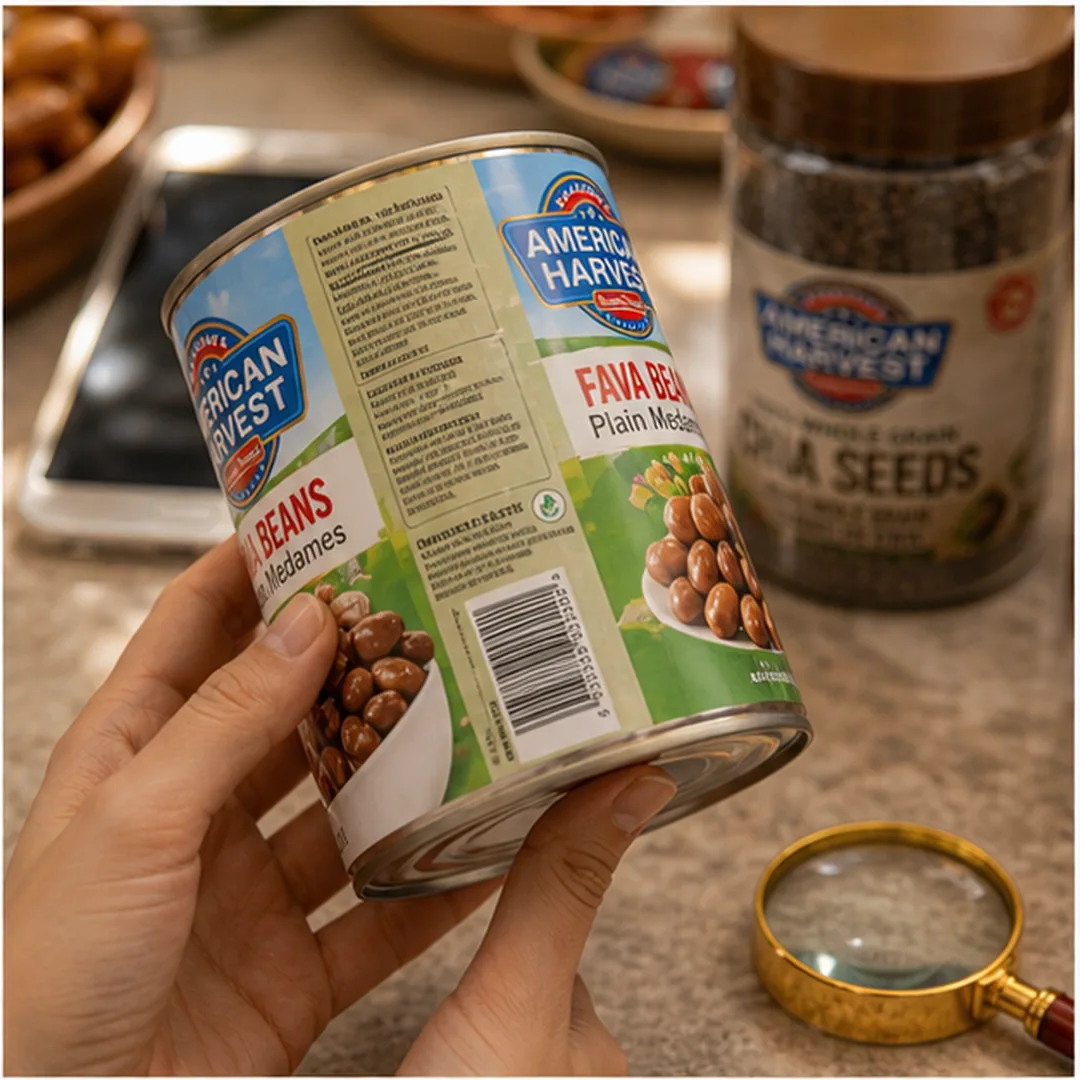
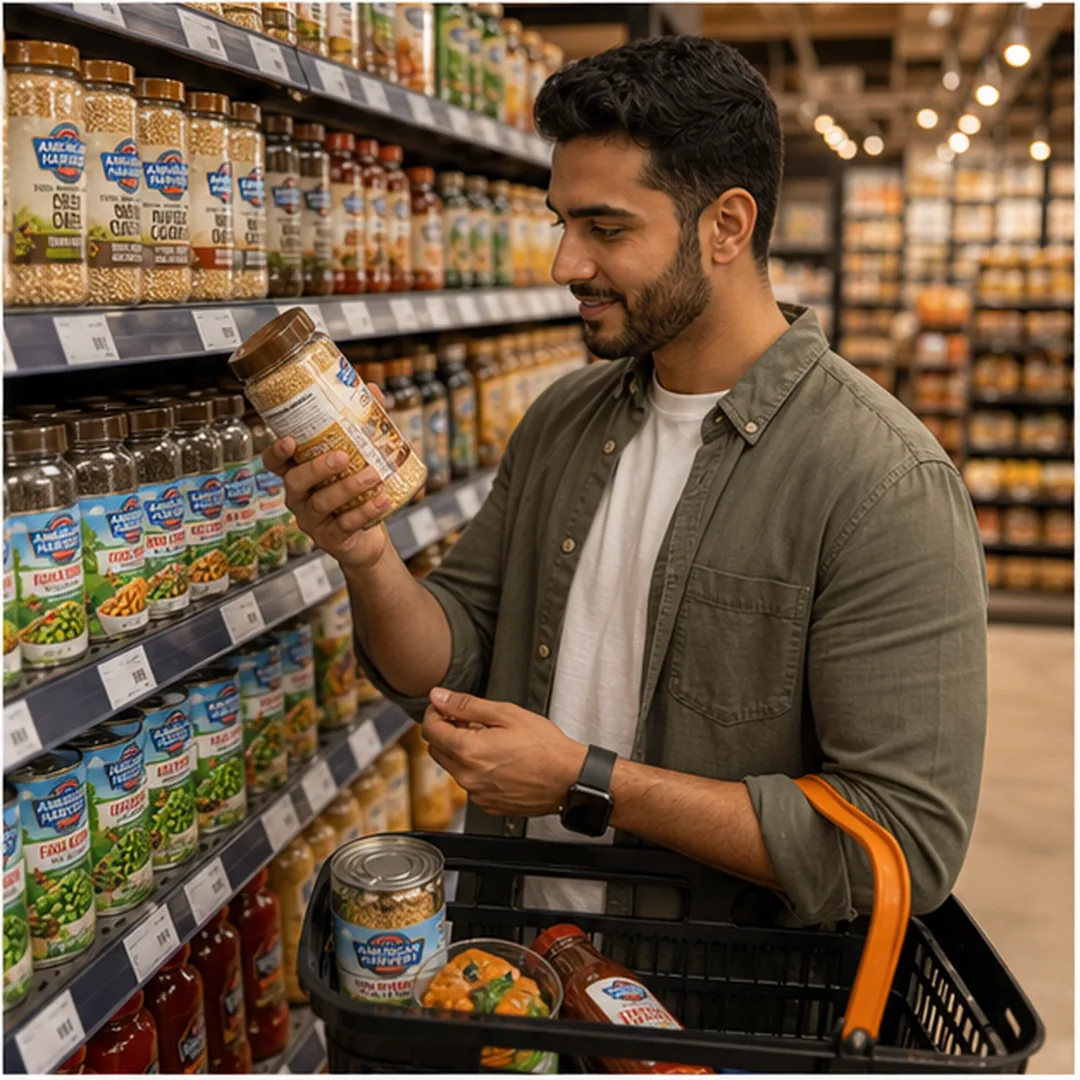
Picking up an imported American product is exciting, but the label can look a little different from what UAE shoppers are used to. The American Nutrition Facts panel has its own layout, its own terms and its own way of expressing portions. Learning to read American nutrition labels turns that unfamiliar block of numbers into a genuinely useful tool, helping you compare products, manage your intake and shop with confidence.
This guide walks through the key parts of a US food label in plain language. None of it requires a nutrition background. Once you know where to look and what each figure means, you can make quick, informed decisions in the aisle whether you are buying snacks, cereals, sauces or pantry staples. The same skills apply right across the American range, so the time you spend learning the layout once pays off on every future shop.
It helps to remember why the American panel looks the way it does. It is designed to be read at a glance, with the most important information placed at the top and the detail flowing beneath it. Once you understand that logic, the panel stops being a wall of figures and becomes a structured tool you can work through in seconds. The sections that follow take it line by line, from the serving size at the top to the ingredient and allergen statements at the bottom.
Start with the serving size
The single most important line on any American nutrition label is the serving size, because every other number on the panel is based on it. The pack may contain several servings, so the calories and nutrients listed are not necessarily for the whole product. A bag of crisps, for example, might list figures per serving while the bag holds three or four servings, which is easy to miss if you glance only at the calorie count.
Get into the habit of reading the servings per container alongside the serving size. If a product looks low in calories or sugar, check whether that figure applies to the portion you actually intend to eat. This one step prevents the most common misreading of US labels and makes comparisons between products far more honest. It is also worth noting that American serving sizes are given in both household measures, such as cups or pieces, and in grams, which makes it straightforward to weigh out a true portion if you want to be precise.
When the whole pack is one serving
Modern American labels have made an effort to align serving sizes with how people really eat. For smaller packs that a person would typically finish in one sitting, the label may now present the entire container as a single serving, or show two columns: one per serving and one per pack. This is a genuine help, because it removes the guesswork of multiplying figures in your head. When you see a dual-column label, read the per-pack column if you expect to eat the whole thing, and the per-serving column if you intend to portion it. Recognising which layout you are looking at is the first habit worth building.
Calories, macros and what they tell you
Below the serving information you will find calories, then the macronutrients: total fat, carbohydrates and protein, each broken down further. Total fat splits into saturated and trans fat; carbohydrates include dietary fibre and sugars, with added sugars listed separately on modern American labels. Protein is shown as a single figure. Reading these together gives you a quick sense of what kind of food you are holding, well before you reach the ingredient list.
The calorie figure is the headline, but it is most useful in context. A higher-calorie food is not automatically a poorer choice; what matters is what those calories are made of and how the product fits into your day. A handful of nuts and a handful of sweets might carry similar calories while being very different foods. Reading the macronutrient breakdown beneath the calorie line is what lets you tell the difference, and it is why the experienced label reader rarely stops at the calorie count alone.
Added sugars versus total sugars
One of the most useful features of the updated American label is the distinction between total sugars and added sugars. Total sugars include those occurring naturally, such as in fruit or dairy, while added sugars are those introduced during production. For anyone watching their sugar intake, the added-sugars line is the more meaningful number. When you %browse the imported American products we supply%, you can use this line to compare similar products quickly and spot which option is genuinely lighter rather than merely marketed that way.
This distinction matters because front-of-pack marketing can be misleading. A product made with fruit may carry a healthy-sounding claim while still containing a significant amount of added sugar, and only the added-sugars line on the back of the pack reveals it. Conversely, a fruit-based product might look high in total sugars yet have little or nothing added. Reading the two lines together, rather than reacting to the total alone, gives you a far more accurate picture of what is actually in the food.
Fibre, fats and the numbers worth chasing
Not every figure on the panel is something to limit. Dietary fibre is a number worth seeking out, particularly in cereals, crackers and wholegrain snacks, because it contributes to a more satisfying product. Likewise, the split between saturated and unsaturated fat tells you more than the total fat figure alone. A snack can be relatively high in total fat yet still be a reasonable choice if most of that fat comes from nuts or seeds rather than from saturated sources.
Reading the breakdown rather than the headline number is what separates a quick judgement from an informed one. Protein is another figure worth noting, especially in snack and breakfast products, because it tends to make a food more filling. The point is not to chase or avoid any single number in isolation but to read the panel as a whole, weighing the figures you want more of against those you want less of. With a little practice this becomes second nature rather than a calculation.
Sodium, the quiet number worth watching
One figure that often slips past a quick read is sodium. It appears on every American panel, usually with a Percent Daily Value beside it, yet many shoppers overlook it because it is not part of the calorie or sugar story that draws the eye. In snacks, sauces and many pantry staples, sodium can be surprisingly high, and it adds up quickly across a day of eating. Getting into the habit of glancing at the sodium line, and its percentage, is one of the simplest improvements you can make to how you read a label. As with other nutrients, the rule of thumb holds: around five percent of the Daily Value is low and twenty percent or more is high.
Understanding Percent Daily Value
To the right of many nutrients you will see a Percent Daily Value, shown as a percentage. This tells you how much one serving contributes to a daily diet based on a standard reference intake used in the United States. A simple rule of thumb is that around five percent or less is low for a given nutrient, while twenty percent or more is high.
Daily Value is most useful as a quick gauge rather than an exact prescription. Use the high figures to limit nutrients you want less of, such as saturated fat, sodium and added sugars, and use them to seek out more of the nutrients you want, such as fibre. It is a fast way to read a label without doing any arithmetic. Bear in mind that the reference intake behind the percentages is a standard figure, so if your own dietary needs differ the percentages are still a helpful relative guide rather than a personal target.
Using Daily Value to compare two products
The Percent Daily Value really comes into its own when you are choosing between two similar items. Rather than comparing raw gram figures, which can be hard to interpret, you can glance at the percentages and see at once which product is higher in sodium or added sugar and which is higher in fibre. Because both labels use the same reference intake, the comparison is fair even when the serving sizes differ slightly. This is one of the quickest ways to make a confident choice in the aisle without weighing up numbers in your head.
Ingredients, allergens and order
The ingredient list is just as informative as the numbers. American labels list ingredients in descending order by weight, so the first few items make up most of the product. If sugar or a sweetener appears near the top, the product is sugar-led regardless of how it is marketed on the front of the pack. The same applies to oils, salt and refined flours, all of which tell you something about the nature of the food.
Allergen information is also clearly stated on US labels, with common allergens such as wheat, milk, eggs, soy, peanuts and tree nuts called out. For anyone with an allergy or intolerance, this is essential reading. The clarity of American allergen labelling is one of the reasons imported products can be a confident choice, provided you buy the genuine article through a reliable source. You can %find a store that stocks them% to make sure you are buying authentic, correctly labelled stock that matches what the manufacturer intended.
Reading between the headline claims
Front-of-pack claims and the back-of-pack panel tell two different stories, and the panel is always the more reliable of the two. A claim such as natural, lightly sweetened or made with real fruit describes one aspect of a product, not the whole picture. The ingredient list and the Nutrition Facts panel are where the full story lives. A useful discipline is to read the front of the pack to understand what the product is trying to be, then turn it over to confirm whether the numbers and ingredients support that promise. Where the two disagree, trust the panel.
How American labels compare to what UAE shoppers know
Shoppers in the UAE are used to a mix of labelling styles, so a few American conventions are worth flagging. Energy is given in calories rather than kilojoules, which is the figure most US-focused recipes and apps reference. Quantities lean on cups, ounces and Fahrenheit elsewhere on the pack, though the nutrition panel itself always provides metric weights. And the added-sugars line, which is a relatively recent and very welcome feature, is something many other labelling systems still do not break out as clearly.
Knowing these small differences means an American label never trips you up, even when it is sitting next to products labelled to other standards on the same shelf. In a market as international as the UAE, where products arrive from many countries and follow several different conventions, being comfortable with the American panel simply adds another tool to your shopping. Rather than treating an unfamiliar label as a barrier, you can read it as confidently as any other, which widens the range of products you can choose from with real understanding.
Calories, metric weights and everyday units
The two conventions most likely to catch a UAE shopper out are the use of calories instead of kilojoules and the appearance of cups, ounces and Fahrenheit in cooking instructions. Neither needs to be a problem. The nutrition panel always gives metric weights in grams and milligrams, so the core figures are directly comparable to other labels. For cooking measures, a quick mental conversion or a kitchen scale removes any friction. Once you know to expect these units, they become a minor quirk rather than an obstacle.
Teaching the family to read labels too
Label reading is a skill worth sharing, especially within a household where different members have different needs and preferences. Children who learn early to glance at a serving size or an added-sugars line grow into adults who make informed choices without it feeling like an effort. A simple way to start is to make label reading part of the ordinary routine of shopping, pointing out the serving size on a pack of crisps or comparing the fibre in two cereals together. It turns an abstract idea into a practical habit.
For families managing an allergy or a particular dietary requirement, sharing the skill is more than a nicety; it is a safeguard. When more than one person in the household knows how to read the allergen statement and the ingredient list, the responsibility no longer rests on a single pair of eyes. This shared fluency is reassuring, and it is one of the quiet benefits of choosing genuine, clearly labelled imported products: the information is there, it is reliable, and anyone in the family can learn to use it.
From label reading to confident shopping
Ultimately the goal is not to turn shopping into a study exercise but to make it faster and more confident. Once the basics are second nature, reading a label takes only a moment and removes the uncertainty that can otherwise make an unfamiliar imported product feel like a gamble. Far from slowing you down, the skill speeds you up, because you no longer hesitate over the back of the pack. You simply read what you need, make your choice and move on, free to enjoy the variety of authentic American food on its own terms.
Reading labels for specific dietary needs
Label reading becomes especially valuable when you or someone in your household has a particular dietary requirement. The American Nutrition Facts panel and ingredient list together carry almost everything you need to make a confident choice, provided you know which lines to prioritise. Someone managing their sodium intake, for instance, can go straight to the sodium figure and its Percent Daily Value, while someone watching added sugars has a dedicated line that did not exist on older labels. The panel is designed to serve these targeted readings, not just a general glance.
For those following higher-protein or higher-fibre eating patterns, the panel makes comparison straightforward. Rather than guessing which breakfast cereal or snack is more filling, you can read the protein and fibre figures directly and choose accordingly. The key is to decide before you pick up the pack which one or two numbers matter most to you, then read those lines first. This turns the panel from an overwhelming block of data into a focused tool that answers your specific question in a few seconds.
Managing allergies and intolerances with confidence
For anyone with a food allergy or intolerance, the allergen statement on American labels is one of their most reliable features. Common allergens such as wheat, milk, eggs, soy, peanuts and tree nuts are clearly identified, which removes much of the guesswork from the ingredient list. Even so, the safest habit is to read both the allergen statement and the full ingredient list, since the latter may reveal derivatives or related ingredients that matter to you. This clarity is one of the genuine advantages of imported American products, and it holds true only when the label is authentic and intact, which is why the source of the product is so important.
Reading labels across the American range
The skill of reading a Nutrition Facts panel applies right across the categories of American food, though what you look for shifts a little from one to the next. In snacks and crisps, the serving size and the saturated fat and sodium lines tend to matter most, along with a quick check of how many servings the pack really contains. In breakfast cereals, fibre, added sugars and protein are the figures that tell you whether a product is a substantial start to the day or essentially a sweet treat. The same panel, read with different priorities, serves each category well.
Condiments, sauces and pantry staples reward a slightly different reading again. Here the serving size can be deceptively small, so the per-serving figures for sugar and sodium need to be scaled up to the amount you actually use. A sauce that looks modest per spoonful can add up quickly across a meal. Baking ingredients, meanwhile, are often read for their ingredient list and allergen information as much as their nutrition figures, since they form part of a larger recipe. Learning to adjust your focus by category is what makes label reading genuinely useful rather than mechanical.
Beverages and the liquid calories worth checking
Drinks deserve their own moment of attention, because liquid calories are easy to underestimate. An American soda, juice or sweetened iced tea can carry a meaningful amount of added sugar in a single serving, and the serving listed on the bottle may be smaller than the amount most people actually drink. Reading the added-sugars line on a beverage, and scaling it to the size you will really consume, gives a clearer sense of what you are taking in than the front label ever will. The same panel that helps you choose a cereal or a snack works just as well on a bottle of pop, provided you remember to check how many servings that bottle holds.
A consistent habit, many products
The reassuring thing is that the underlying method never changes. Whatever the category, you work through the same panel in the same order: serving size, calories, the nutrients you care about, Percent Daily Value, then the ingredient and allergen statements. Only your priorities shift. That consistency means the effort of learning the layout once carries across the entire American range, from the snack aisle to the baking shelf, and makes every future shop quicker and more confident.
Practical examples in the aisle
It helps to see how these principles come together on real products rather than in the abstract. Consider a shopper comparing two boxes of American breakfast cereal. Both display a similar calorie figure on the front, which might suggest they are much of a muchness. Turning each box over tells a fuller story: one lists a serving size of one cup with a modest added-sugars figure and a useful amount of fibre, while the other lists a smaller serving with a high added-sugars line and almost no fibre. Read this way, the choice is no longer a coin toss. The first cereal is a more substantial start to the day, and the second is closer to a sweet treat, even though their headline calories looked alike.
Take a second scenario: a shopper choosing between two American snack packs. The first looks higher in total fat and might be dismissed on that basis alone. But the ingredient list shows that fat comes largely from nuts, and the panel shows a reasonable protein figure and little added sugar. The second pack is lower in total fat but sits on a base of refined flour and sweeteners, with sugar near the top of its ingredient list. The shopper who reads beyond the headline fat figure ends up with the more satisfying, more considered choice. These are everyday decisions, and the panel is what makes them informed rather than guessed.
A quick mental checklist
With a little practice, a useful routine settles into place. Glance at the serving size and servings per container. Read the calories in context, not in isolation. Check the one or two nutrients that matter most to you, using the Percent Daily Value as a fast high-or-low gauge. Scan the top of the ingredient list to see what the product is really built from, and read the allergen statement if it is relevant to your household. Run through this sequence a few times and it becomes automatic, taking only a few seconds per product even when you are comparing several at once.
The reason this matters is that confident comparison is where the real value lies. Most shopping decisions are not about a single product in isolation but about choosing between two or three similar options. A shopper who can quickly line up the serving sizes, added sugars and key nutrients of several packs is making a genuine comparison rather than guessing, and that is precisely what the American panel is designed to support. The standard layout, the consistent reference intake behind the percentages and the clear separation of added sugars all exist to make this kind of side-by-side judgement fast and fair. The more you use it, the more the panel rewards you.
Common mistakes when reading nutrition labels
A few recurring mistakes can undo even careful label reading, and they are worth knowing so you can avoid them. The most common by far is ignoring the serving size and reading the figures as though they apply to the whole pack. A product that looks light per serving can be quite different once you account for the three or four servings the pack actually holds. Always anchor your reading to the serving size first.
A second frequent error is reacting to the total sugars figure without checking the added-sugars line beneath it, which can make a fruit-based product look worse than it is or, conversely, lull you into trusting a heavily sweetened one. A third is taking front-of-pack claims at face value instead of confirming them against the panel. And a fourth is treating every number as something to minimise, overlooking the figures, such as fibre and protein, that are worth seeking out. Reading the panel as a balanced whole, rather than hunting only for what to avoid, gives a far truer picture of the food in your hand.
Why buying genuine, correctly labelled imports matters
Reading an American label well is a matter of working through it in order: serving size first, then calories and the nutrients you care about, then a glance at the Percent Daily Value and finally the ingredient list. With a little practice the whole process takes seconds.
- Check the serving size and servings per container
- Compare added sugars, sodium and saturated fat across products
- Use Percent Daily Value as a quick high or low gauge
- Scan the top of the ingredient list and the allergen statement
- Trust the back-of-pack panel over front-of-pack marketing claims
If you ever come across a term on a label that is unfamiliar or want guidance on a particular product, you can %reach out to our team with any questions% for help. Understanding the label is the bridge between the appeal of authentic American food and the confidence to choose what is right for you and your family. It is a small skill that quietly improves every shop you do in the American aisle.
Why buying genuine, correctly labelled imports matters
All of this advice assumes one important thing: that the label on the pack is accurate and intact. That is only guaranteed when you buy genuine imports through a reliable channel. Unverified parallel imports may carry damaged, missing or mismatched labelling, which undermines the very information you are trying to read. Authentic stock arrives with the manufacturer's own panel, correct allergen statements and formulation that matches what is printed on the pack.
This is why the source of a product matters as much as the label itself. A correctly labelled, genuine import lets you apply everything in this guide with confidence, knowing that the serving sizes, the added-sugars line and the allergen call-outs are all reliable. To understand how authentic American products reach UAE shelves, you can %learn more about American Harvest Foods%, and to see the breadth of what that covers you can %explore the wider American Harvest Foods range%. When the supply chain is trustworthy, label reading becomes a genuinely empowering skill rather than a guessing game.
Like any skill, label reading rewards a little practice. The first few times you may pause over the panel, but before long you will find yourself scanning serving size, added sugars and the top of the ingredient list almost automatically. That fluency is what lets you enjoy the variety of authentic American products without ever feeling that the numbers on the back of the pack are a mystery, and it puts every decision firmly back in your own hands.
Frequently Asked Questions
Why is the serving size so important on American labels?
Every other figure on the Nutrition Facts panel, including calories and nutrients, is calculated per serving rather than per pack. A product may contain several servings, so the listed numbers can understate what you actually consume. Always read the serving size and servings per container together, and check whether the figures apply to the portion you actually intend to eat.
What is the difference between total sugars and added sugars?
Total sugars include those that occur naturally, such as in fruit or milk, as well as any added during production. Added sugars, listed separately on modern American labels, are those introduced by the manufacturer. The added-sugars line is the more useful figure if you are trying to limit sugar intake, and it often reveals more than a healthy-sounding front-of-pack claim.
How do I use Percent Daily Value?
Percent Daily Value shows how much one serving contributes to a standard daily diet. As a quick guide, around five percent or less is low and twenty percent or more is high. Use it to limit nutrients you want less of and to seek out those you want more of, such as fibre. It is also a fast way to compare two similar products without weighing up raw gram figures.
Do American labels show allergens clearly?
Yes, US labels clearly call out common allergens such as wheat, milk, eggs, soy, peanuts and tree nuts. This makes them reliable for anyone managing an allergy or intolerance. Buying genuine, correctly labelled imports through a trusted source ensures that information is intact and matches what the manufacturer intended.
Why does the American label use calories instead of kilojoules?
American labels express energy in calories, which is the standard unit used in the United States and referenced by most US-focused recipes and apps. UAE shoppers may be used to seeing kilojoules on some other labels. The figure itself is straightforward to read, and the nutrition panel always provides metric weights in grams and milligrams, so it remains directly comparable to other products.
Should I trust front-of-pack claims or the nutrition panel?
The back-of-pack Nutrition Facts panel and the ingredient list are always more reliable than front-of-pack marketing claims. A claim such as natural or made with real fruit describes one aspect of a product, not the whole picture. A good habit is to read the front to understand what the product is trying to be, then turn it over to confirm whether the numbers support it.
What does the order of ingredients tell me?
American labels list ingredients in descending order by weight, so the first few items make up most of the product. If sugar, a sweetener, oil or refined flour appears near the top, that tells you a great deal about the nature of the food regardless of how it is marketed. Scanning the top of the ingredient list is one of the quickest ways to understand what you are buying.
Are American serving sizes given in grams or cups?
Both. American serving sizes are shown in household measures such as cups or pieces and also in grams, which makes it easy to weigh out a precise portion if you wish. Many modern labels also show dual columns, one per serving and one per pack, for smaller items a person might finish in one sitting. Reading both figures removes the need to do any mental arithmetic.
Why does buying genuine imports matter for label reading?
Label reading only works if the label is accurate and intact, which is guaranteed only with genuine imports bought through a reliable channel. Unverified parallel imports may carry damaged, missing or mismatched labelling that undermines the information you are trying to read. Authentic stock arrives with the manufacturer's own panel, correct allergen statements and formulation that matches the print on the pack.
Do I need a nutrition background to read these labels?
Not at all. Reading an American nutrition label is a simple, practical skill that anyone can pick up in a few shops. Work through the panel in order, serving size first, then calories and the nutrients you care about, then Percent Daily Value and the ingredient list. With a little practice the whole process takes only seconds and becomes second nature.